Are We Still Coaching Female Athletes Like Men?
 Karen Parnell
June 01, 2026
Karen Parnell
June 01, 2026
Why female physiology and biomechanics should influence how we think about strength training, injury prevention and performance
If you prefer to listen to Blogs you can listen to it here:
For decades, much of what we considered "best practice" in endurance training, strength coaching and exercise technique was developed using research conducted primarily on men. While this knowledge has undoubtedly advanced sport, it has also created an assumption that female athletes are simply smaller versions of their male counterparts.
We now know that isn't true.
Female athletes differ in anatomy, biomechanics and physiology in ways that can influence performance, injury risk and training priorities. The challenge for coaches is understanding which differences matter—and which don't.
You may have heard claims that women should perform certain exercises differently from men. One example currently circulating on social media is that women should rotate their hands slightly outward during press-ups because of differences in shoulder and elbow anatomy.
While there may be some biomechanical logic behind this idea, the scientific evidence is currently limited. More importantly, it raises a much bigger question:
How much of the training advice we follow was originally developed around male anatomy and physiology?
The answer is not that women need completely different exercises. Rather, female athletes often benefit from different coaching priorities and strength training emphases that reflect how their bodies naturally move and respond to training.
Get your FREE Swim Workouts for Triathletes E-book
There Is No Such Thing as a Perfect Running Form
One of the biggest myths in endurance sport is that there is a single ideal running technique.
Many of the images we associate with "good running form" originate from observations of elite male runners. Yet female athletes are built differently.
On average, women have:
- A wider pelvis relative to body size
- Different hip geometry
- Greater Q-angle (the angle between the hip and knee)
- Different lower limb alignment
- Greater joint laxity
Systematic reviews have consistently shown that female runners exhibit greater hip adduction, greater hip internal rotation and different lower-limb kinematics compared with male runners (Xie et al., 2022; Perpiñá-Martínez et al., 2023).
These anatomical and biomechanical differences influence movement patterns during running.
Research consistently shows that female runners often demonstrate greater hip adduction, greater hip internal rotation and different lower-limb loading patterns than their male counterparts. Traditionally, these movements were sometimes viewed as flaws that needed correcting.
However, modern biomechanics suggests a more nuanced approach.
The question is not whether a female athlete moves exactly like a male athlete. The question is whether her movement pattern is efficient, comfortable and resilient to injury.
Trying to force every female runner to look like an elite male runner may not only be unnecessary—it may be counterproductive.
The goal should be optimal movement, not identical movement.
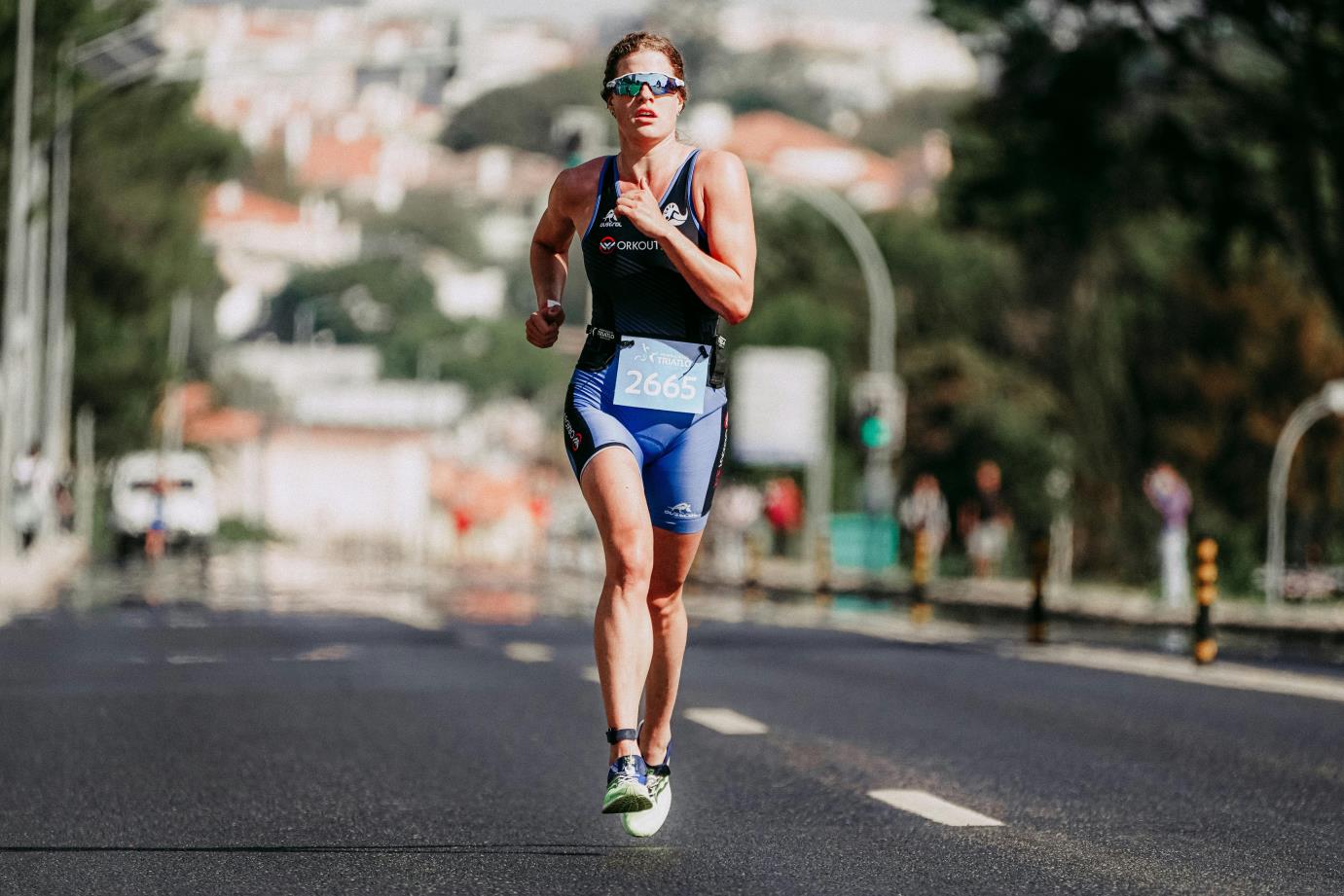
Photo by RUN 4 FFWPU
Get your FREE Guide to Running Speed and Technique
Why Strength Training Matters Even More for Female Triathletes
Where the evidence becomes particularly compelling is in the area of injury prevention and strength development.
Female athletes experience higher rates of certain injuries, including:
- ACL injuries
- Patellofemoral pain syndrome
- Bone stress injuries
- Some hip and knee overuse injuries
While multiple factors contribute to these risks, strength training can play a significant role in reducing them.
Research suggests that the increased incidence of ACL injuries in female athletes is influenced by a combination of anatomical, neuromuscular and hormonal factors (Mancino et al., 2024). Encouragingly, neuromuscular training programmes have been shown to substantially reduce ACL injury risk in female athletes (Petushek et al., 2019).
Rather than focusing on "female versions" of exercises, coaches should prioritise developing the qualities that support female biomechanics.
These include:
Hip Stability
The gluteus medius plays a crucial role in controlling pelvic position and lower limb alignment during running.
When fatigue sets in during long training sessions or races, reduced hip stability can increase stress throughout the kinetic chain.
Exercises such as:
- Single-leg squats
- Lateral step-downs
- Walking lunges
- Lateral band walks
can help improve control and resilience.
The goal is not to eliminate movement. The goal is to control movement effectively.
Single Leg Squat eExercise Source: Hinge Health
Get your FREE 23-Page Athletes Guide to Strength and Conditioning
Single-Leg Strength
Triathlon is fundamentally a single-leg sport.
Every running stride requires the body to absorb and produce force through one leg at a time.
Single-leg exercises often provide greater transfer to running than traditional bilateral exercises alone.
Particularly effective options include:
- Single-leg Romanian deadlifts
- Split squats
- Step-ups
- Rear-foot elevated split squats
These exercises challenge balance, stability and force production simultaneously.
Single-Leg Romanian Deadlift Source: Medstar Heath
Get your FREE 23-Page Athletes Guide to Strength and Conditioning
Hamstring Strength
Strong hamstrings play an important role in knee stability, force production and running performance.
For triathletes, the hamstrings contribute not only during the run but also help stabilise the lower limb and pelvis throughout training. Developing adequate posterior-chain strength can improve resilience to fatigue and may help reduce excessive loading elsewhere in the kinetic chain.
Strong hamstrings support:
- Knee stability
- Running economy
- Sprint performance
- Injury prevention
Exercises such as Romanian deadlifts, Nordic hamstring curls and hip thrusts deserve a place in most female triathletes' strength programmes.
Nordic Hamstring Curl Source: Sports Injury Clinic
Get your FREE 23-Page Athletes Guide to Strength and Conditioning
What About Swimming and Cycling?
The same principles apply outside of running.
Many female athletes naturally possess greater mobility, particularly around the shoulders and hips.
While mobility can be advantageous in swimming, excessive mobility without sufficient strength can sometimes create stability challenges.
For swimmers, rotator cuff strength and scapular control become particularly important.
On the bike, female anatomy can influence comfort and positioning.
Differences in pelvic width, hip structure and flexibility may affect saddle choice, cockpit setup and riding posture. Historically, many bike-fitting systems were developed around male anthropometrics, which may explain why some female athletes struggle to find a comfortable position despite seemingly following standard recommendations.
Get your FREE 31 Structured Cycling Sessions and Training Plan
The Push-Up Question
So, should women rotate their hands outward during press-ups?
Perhaps.
Some women may find that a slight external rotation of the hands feels more natural due to differences in elbow carrying angle and shoulder structure. However, the current evidence does not support a universal recommendation.
The most important lesson is not about hand position.
It is about recognising that female athletes may not always fit neatly into exercise techniques originally developed and taught using male examples.
Good coaching should accommodate individual anatomy rather than force every athlete into the same movement pattern.
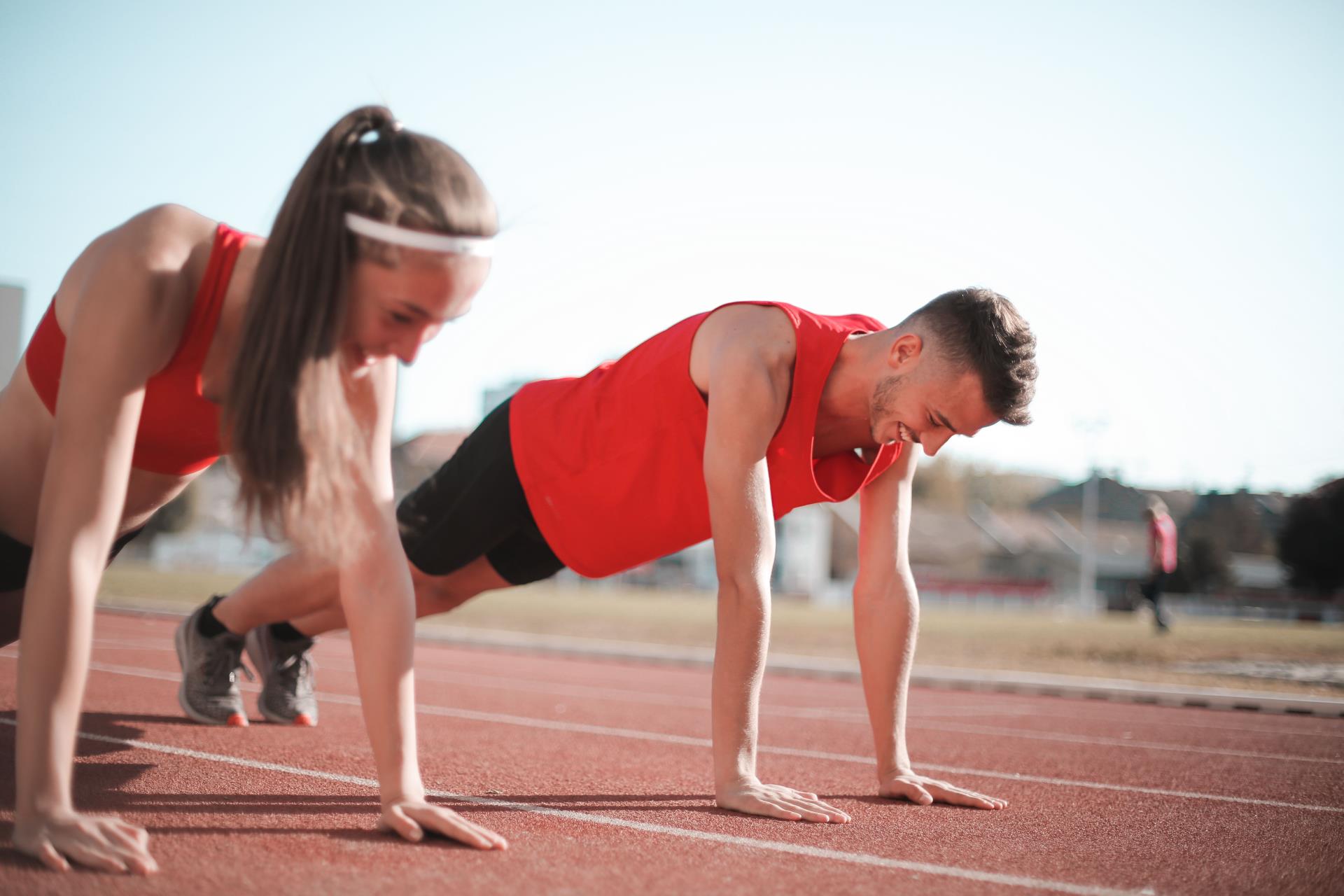
Photo by Andrea Piacquadio
Get your FREE 23-Page Athletes Guide to Strength and Conditioning
What This Means for Female Triathletes
Rather than searching for female-specific exercises, focus on:
- Building single-leg strength
- Improving hip stability
- Developing posterior-chain strength
- Prioritising movement quality over appearance
- Working with your anatomy rather than against it
The goal isn't to move like a male athlete.
The goal is to become the strongest, healthiest and fastest version of yourself.
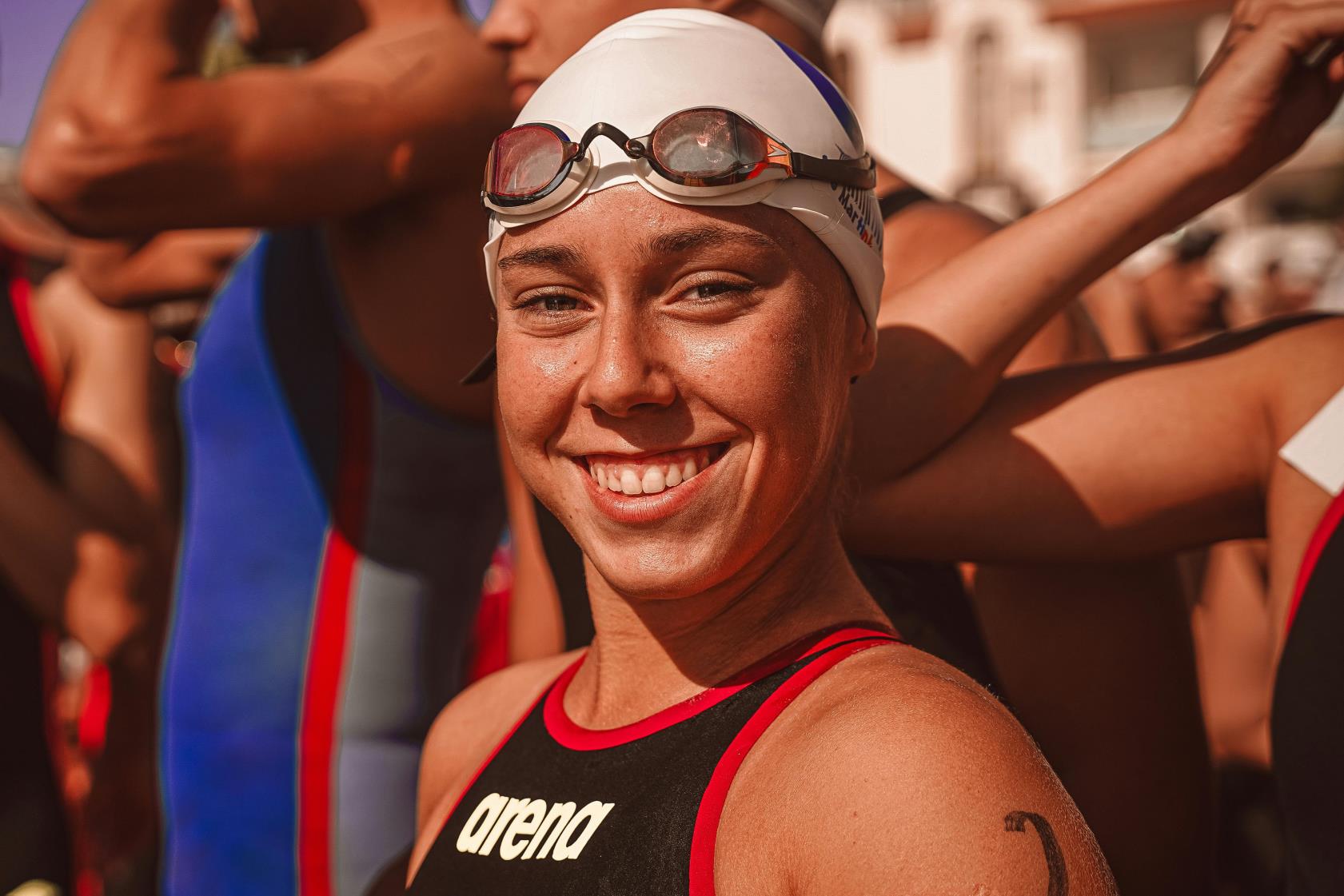
Photo by RUN 4 FFWPU
Get your FREE Open Water Swimming Sessions E-Book
Conclusion and The Takeaway
Female athletes do not need completely different exercises.
They do not need "pink" training programmes.
They do not need to run, squat or lift like men.
What they do need is coaching that recognises female physiology, female biomechanics and female-specific performance considerations.
The strongest evidence suggests that female triathletes benefit from prioritising:
- Hip stability
- Single-leg strength
- Hamstring development
- Movement control
- Individualised coaching rather than one-size-fits-all technique
Ultimately, the goal is not to make female athletes move more like men.
The goal is to help female athletes become stronger, healthier and faster within the anatomy they already have.
Karen Parnell is a Level 3 British Triathlon Federation Coach, IRONMAN U Certified Coach, qualified NASM Personal Trainer and holds an MSc in Sports Performance Coaching. Karen has a Certificate in Coaching Female Athletes from World Triathlon. She specialises in helping endurance athletes improve performance, strength and long-term health through evidence-based coaching.
Need a training plan? I have plans on TrainingPeaks and FinalSurge:
I also coach a very small number of athletes one-to-one for all triathlon and multi-sport distances, open water swimming events, and running races. Email me for details and availability. Karen.parnell@chilitri.com
Get your FREE 23-Page Athletes' Guide to Strength and Conditioning
Get your FREE Guide to Running Speed and Technique
Get your FREE 31 Structured Cycling Sessions and Training Plan
Get your FREE Swim Workouts for Triathletes E-book
References
Mancino F, et al. (2024). Anterior Cruciate Ligament Injuries in Female Athletes: Risk Factors and Prevention Strategies.
Perpiñá-Martínez M, et al. (2023). Sex Differences in Pelvic Kinematics During Running.
Petushek EJ, Sugimoto D, Stoolmiller M, Smith G, Myer GD. (2019). Evidence-Based Best-Practice Guidelines for Preventing Anterior Cruciate Ligament Injuries in Young Female Athletes: A Systematic Review and Meta-analysis.
Xie PP, István B, Liang M. (2022). Sex-Specific Differences in Biomechanics Among Runners: A Systematic Review with Meta-analysis.