
Jumping Rope: A Research-Backed Training Tool for Runners and Women Over 40
 Karen Parnell
January 29, 2026
Karen Parnell
January 29, 2026
Jumping Rope: A Research-Backed Training Tool for Runners and Women Over 40
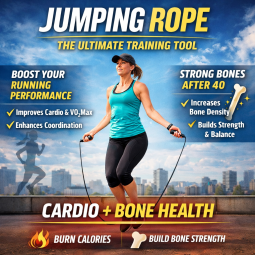
Jumping rope — or skipping rope, as it is commonly known in the UK — is often dismissed as a childhood pastime. However, growing scientific evidence and applied sports science practice support its use as a highly effective training modality for both cardiovascular performance and musculoskeletal health (Independent, 2024).
If you prefer to listen to Blogs you can listen to it here:
Get your FREE 23-Page Athletes Guide to Strength and Conditioning
1. The Cardio Advantage for Runners
For endurance athletes — runners, triathletes, and multisport competitors — aerobic capacity and cardiovascular efficiency underpin performance. Skipping rope provides a surprisingly powerful stimulus in a time-efficient format.
High Cardiovascular Demand
Jump rope elevates heart rate rapidly and can elicit both aerobic and anaerobic adaptations depending on intensity and work-to-rest ratios. Observational comparisons suggest that skipping produces cardiovascular strain comparable to running intervals, while requiring less space and less total session time (Independent, 2024).
This makes it particularly useful for athletes managing heavy training loads, travel, or poor weather conditions.
Comparable Effects on Aerobic Fitness
Research examining rope-based training has demonstrated improvements in markers of aerobic fitness, including VO₂max and running economy, when skipping is performed regularly at moderate-to-high intensities (Baker, 1968; Independent, 2024). From a coaching perspective, skipping offers a way to stimulate cardiovascular adaptation without the cumulative joint loading of additional running mileage.
Neuromuscular and Running Economy Benefits
Skipping requires precise timing, rapid ground contact, and rhythmic coordination. These qualities support neuromuscular efficiency — a known contributor to improved running economy and fatigue resistance (Paavolainen et al., 1999). The repetitive elastic rebound seen in skipping mirrors the stretch-shortening cycle used during running.
Coaching Application for Runners
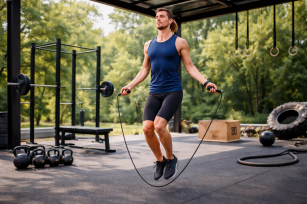
Include skipping 2–3 times per week as part of a warm-up or interval set (e.g. 3–5 × 60–90 seconds), focusing on light, reactive foot contacts rather than maximal height.
2. Plyometric and Bone Health Benefits for Women Over 40
Bone mineral density (BMD) naturally declines with age, with accelerated losses occurring in women during the peri- and post-menopausal years due to hormonal changes. Weight-bearing, impact-based exercise is a key non-pharmacological strategy for slowing this decline.
Evidence for Bone Density Improvements
Multiple studies have shown that jumping-based interventions improve or preserve bone mineral density at clinically important sites such as the hip and femoral neck (Turner & Robling, 2003; Zhao et al., 2014). In controlled trials, short bouts of daily jumping — sometimes fewer than 20 jumps per day — were sufficient to stimulate measurable increases in hip BMD compared with non-jumping control groups (Vainionpää et al., 2006).
Skipping rope provides a practical way to deliver this osteogenic stimulus without the need for gym-based plyometric equipment.
Why Jumping Works for Bone
Bone tissue responds to mechanical strain. High-impact loading produces ground reaction forces that trigger osteoblast activity, promoting bone formation and slowing age-related bone loss (Turner, 1998). Importantly, the rate of force application — not just total load — appears critical, making plyometric actions like skipping particularly effective (Robling et al., 2001).
Functional Benefits Beyond Bone
In addition to skeletal health, skipping improves balance, coordination, and lower-limb stiffness — factors associated with reduced fall risk in older adults (Cleveland Clinic, 2023). These adaptations are highly relevant for women over 40 seeking to maintain confidence and resilience in everyday movement.
Photo by cottonbro studio
Get your FREE 23-Page Athletes Guide to Strength and Conditioning
3. Plyometrics and Aging: Safety and Effectiveness
Skipping rope is a form of low-amplitude plyometric training. While plyometrics were once considered unsuitable for older populations, current research supports their inclusion when appropriately progressed.
What the Research Shows
Systematic reviews indicate that plyometric training in older adults can improve muscular power, functional performance, and bone health markers without increasing injury risk, provided exercises are scaled and supervised appropriately (Stojanović et al., 2017).
Gradual progression — starting with low volumes and bilateral jumps — is key to ensuring tendon and joint tolerance.
Coaching Note:
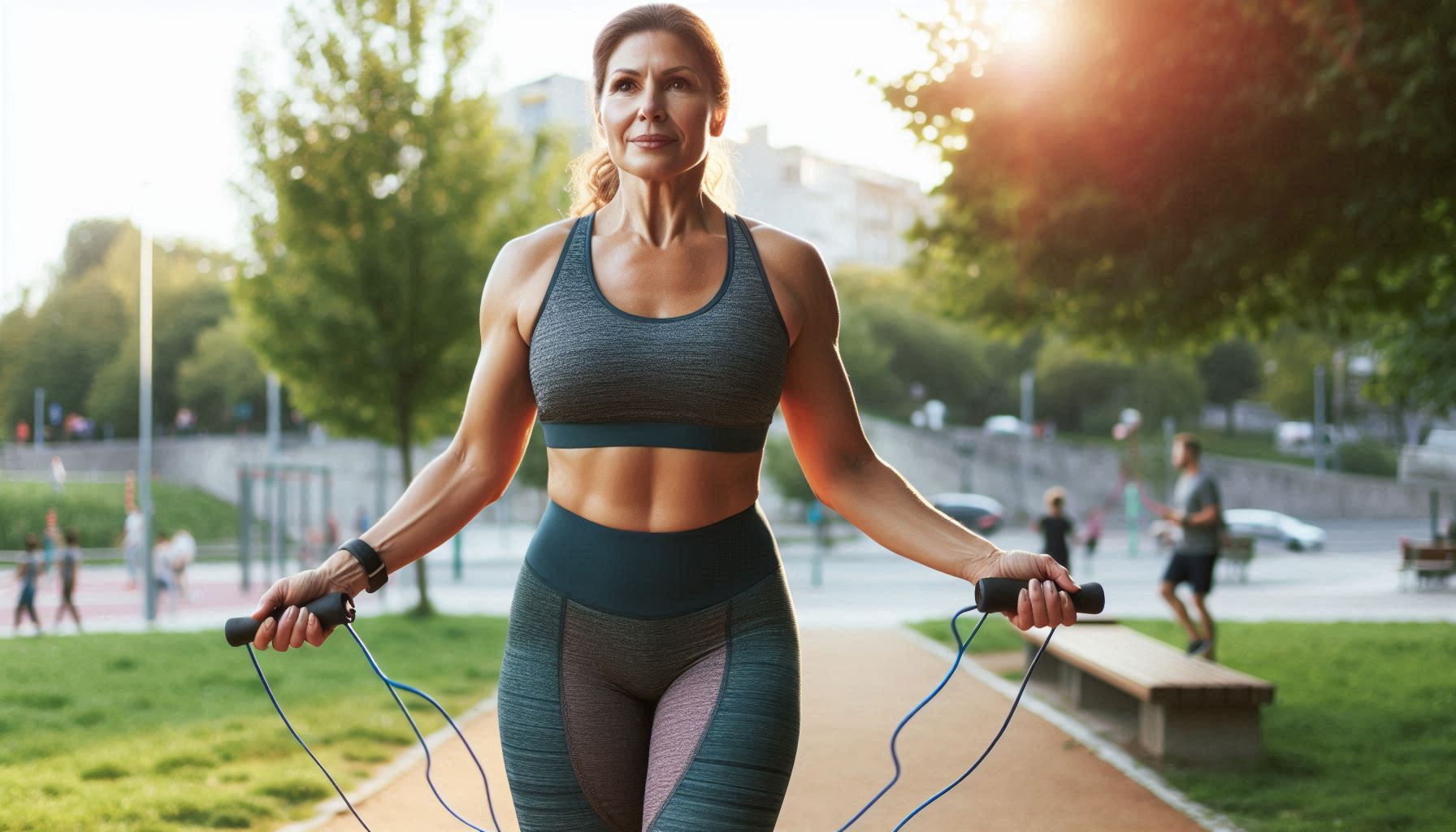
For women over 40, begin with short sets (e.g. 10–20 low-impact jumps), prioritising technique, posture, and controlled landings before increasing volume or complexity. It's extremely important to jump rope well, watch the video below to understand how.
How To Jump Rope the Right Way, Well+Good
Get your FREE 23-Page Athletes Guide to Strength and Conditioning
4. Practical Programming Guidelines
For Endurance Athletes
- Warm-up integration: 3–5 minutes of easy skipping before run or bike sessions
- Interval conditioning: 30–60 second bouts at high intensity with equal recovery
- Supplementary cardio: Useful during reduced-impact phases or injury-prevention blocks
For Bone Health (Women 40+)
- Frequency: 3–5 days per week
- Dose: Multiple short sets of 10–20 jumps
- Progression: Gradually introduce single-leg or alternating patterns once tolerated
Technical Focus
- Soft, quiet landings
- Slight knee and hip flexion
- Upright torso with minimal vertical displacement
- Rope turned primarily from the wrists
Get your FREE 23-Page Athletes Guide to Strength and Conditioning
5. Summary and Conclusion
From both a coaching and scientific perspective, skipping rope is a highly effective, evidence-supported training tool.
Research indicates that it:
- Provides substantial cardiovascular stimulus comparable to running-based conditioning (Independent, 2024)
- Delivers osteogenic loading critical for maintaining bone density in women over 40 (Vainionpää et al., 2006; Zhao et al., 2014)
- Functions as accessible plyometric training, improving neuromuscular performance and functional resilience (Stojanović et al., 2017)
For runners, triathletes, and midlife women alike, skipping offers a simple, low-cost intervention with disproportionately high return. Plus a skipping rope will probably be the cheapest and most effective piece of kit in your home gym!
Karen Parnell is a Level 3 British Triathlon and IRONMAN Certified Coach, 8020 Endurance Certified Coach, WOWSA Level 3 open water swimming coach, and NASM Personal Trainer and Sports Technology Writer.
Karen has a postgraduate MSc in Sports Performance Coaching from the University of Stirling.
Need a training plan? I have plans on TrainingPeaks and FinalSurge:
I also coach a very small number of athletes one-to-one for all triathlon and multi-sport distances, open water swimming events, and running races. Email me for details and availability. Karen.parnell@chilitri.com
Get your FREE 23-Page Athletes' Guide to Strength and Conditioning
Get your FREE Guide to Running Speed and Technique
References
Baker, J. A. (1968).
Comparison of rope skipping and jogging as methods of improving cardiovascular efficiency of college men. Research Quarterly, 39(2), 240–243.
https://pubmed.ncbi.nlm.nih.gov/5240102/
Paavolainen, L., Häkkinen, K., Hämäläinen, I., Nummela, A., & Rusko, H. (1999).
Explosive-strength training improves 5-km running time by improving running economy and muscle power. Journal of Applied Physiology, 86(5), 1527–1533.
https://journals.physiology.org/doi/full/10.1152/jappl.1999.86.5.1527
Turner, C. H. (1998).
Three rules for bone adaptation to mechanical stimuli. Bone, 23(5), 399–407.
https://doi.org/10.1016/S8756-3282(98)00118-5
Robling, A. G., Hinant, F. M., Burr, D. B., & Turner, C. H. (2002).
Improved bone structure and strength after long-term mechanical loading is greatest if loading is separated into short bouts. Journal of Bone and Mineral Research, 17(8), 1545–1554.
https://doi.org/10.1359/jbmr.2002.17.8.1545
Vainionpää, A., Korpelainen, R., Leppäluoto, J., & Jämsä, T. (2006).
Effects of high-impact exercise on bone mineral density: A randomized controlled trial in premenopausal women. Osteoporosis International, 17, 455–463.
https://pubmed.ncbi.nlm.nih.gov/15221206/
Zhao, R., Zhao, M., & Xu, Z. (2014).
The effects of jumping exercise on bone mineral density in premenopausal women: A meta-analysis. Sports Medicine, 44(10), 1393–1402.
https://pubmed.ncbi.nlm.nih.gov/24981245/
Cleveland Clinic. (2023).
Jump rope benefits: Why it’s a great workout at any age.
https://health.clevelandclinic.org/jump-rope-benefits/
Stojanović, E., Ristić, V., McMaster, D. T., & Milanović, Z. (2017).
Effect of plyometric training on vertical jump performance in female athletes: A systematic review and meta-analysis. Sports Medicine, 47, 975–986.
https://link.springer.com/article/10.1007/s40279-016-0634-6
Vetrovsky, T., Steffl, M., Stastny, P., & Tufano, J. J. (2019).
The efficacy and safety of lower-limb plyometric training in older adults: A systematic review. Sports Medicine, 49(1), 113–131.
https://pubmed.ncbi.nlm.nih.gov/30387072/
Chow, G. C. C., Chung, J. W. Y., & Fong, S. S. M. (2023).
Cardiovascular and metabolic responses to rope skipping exercise of different durations. Applied Sciences, 13(12), 7072.
https://www.mdpi.com/2076-3417/13/12/7072
The Independent (2024).
Jumping rope might be better cardio than running — here’s why.
https://www.independent.co.uk/life-style/health-and-families/jumping-rope-cardio-calories-running-weight-loss-b2905999.html
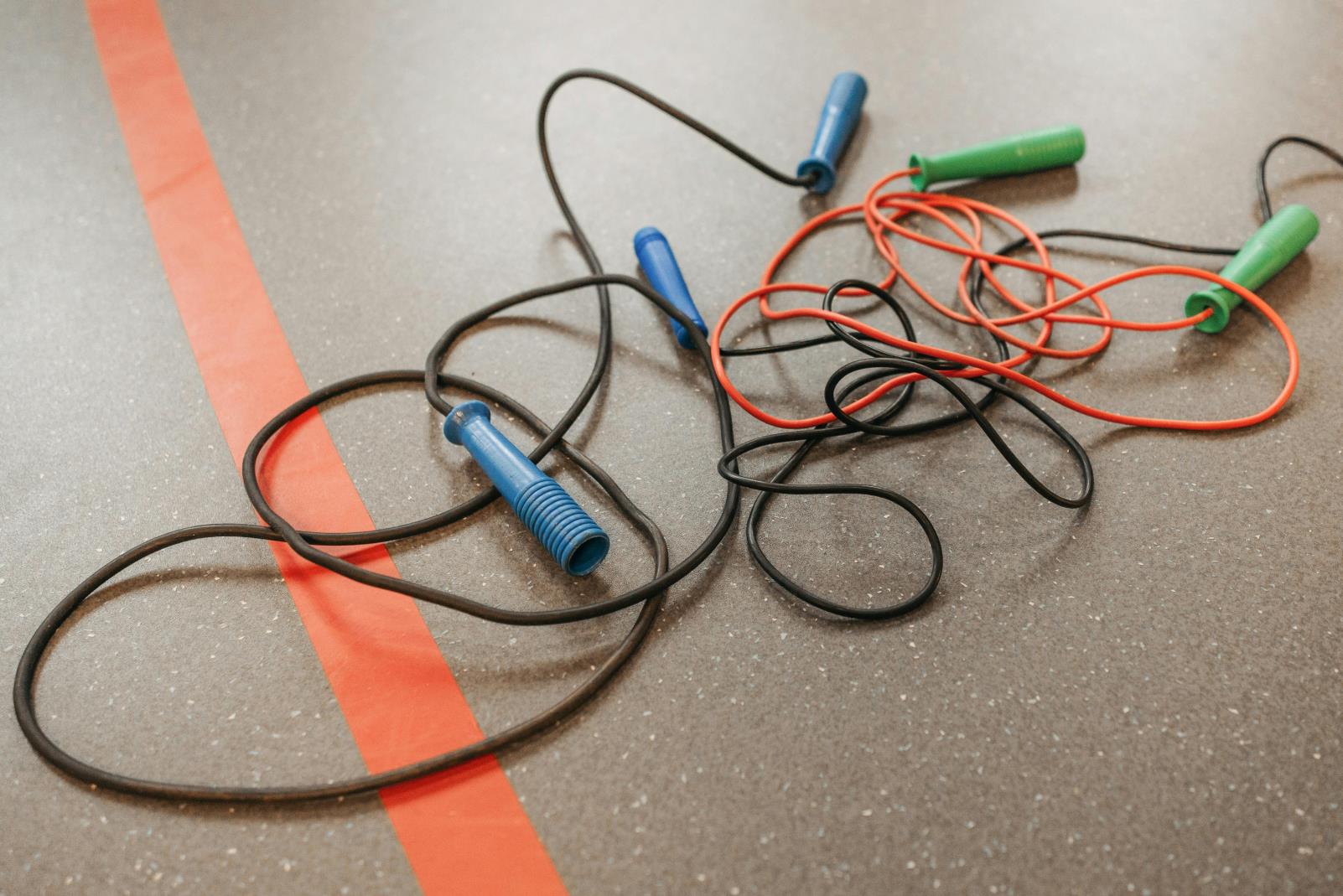
Photo by Pavel Danilyuk
Jump Rope Training: FAQ
Is jumping rope good cardio for runners?
Yes. Jump rope training can elevate heart rate rapidly and deliver both aerobic and anaerobic cardiovascular benefits in a short time. Research shows it can improve cardiovascular fitness and movement efficiency in ways comparable to traditional running-based conditioning, while adding less cumulative impact to the joints when volume is managed appropriately.
Can skipping really help improve bone density?
Yes. Weight-bearing, impact-based activities such as jumping stimulate bone formation by applying mechanical load to the skeleton. Studies show that regular jumping exercises can help maintain or increase bone mineral density, particularly at the hip — an area of concern for women over 40.
Is jumping rope safe for women over 40?
For most healthy women, yes — when introduced gradually and with good technique. Starting with short sets, soft landings, and adequate recovery allows bones, tendons, and joints to adapt safely. Anyone with osteoporosis, joint pain, or a history of stress fractures should consult a qualified professional before starting.
How often should I jump rope to see benefits?
For cardiovascular benefits, 2–3 short sessions per week is sufficient. For bone health, evidence suggests frequent low-volume exposure (e.g. short sets performed 3–5 days per week) may be more effective than infrequent long sessions.
Do I need to jump high to get results?
No. The goal is quick, light, reactive contacts with the ground — not maximal height. Keeping jumps low reduces injury risk while still providing the mechanical stimulus needed for cardiovascular and bone health benefits.
Is skipping better than running?
It’s not a replacement for running, but it is a powerful complement. Jump rope training can improve coordination, foot stiffness, and cardiovascular fitness while offering variety and efficiency. For runners and triathletes, it works best as a supplemental tool rather than a primary endurance session.
What equipment do I need?
A well-fitted jump rope, supportive training shoes, and a stable surface are enough. Many athletes also benefit from adding skipping into an existing strength or endurance routine rather than treating it as a standalone workout. Skipping ropes are not very expensive and could prove to be the cheapest and most effective piece of kit in your home gym!